The Art of the Cliffhanger
Nobody Pays to Find Out What Happens After the Explanation
By RUN.team · August 11, 2026
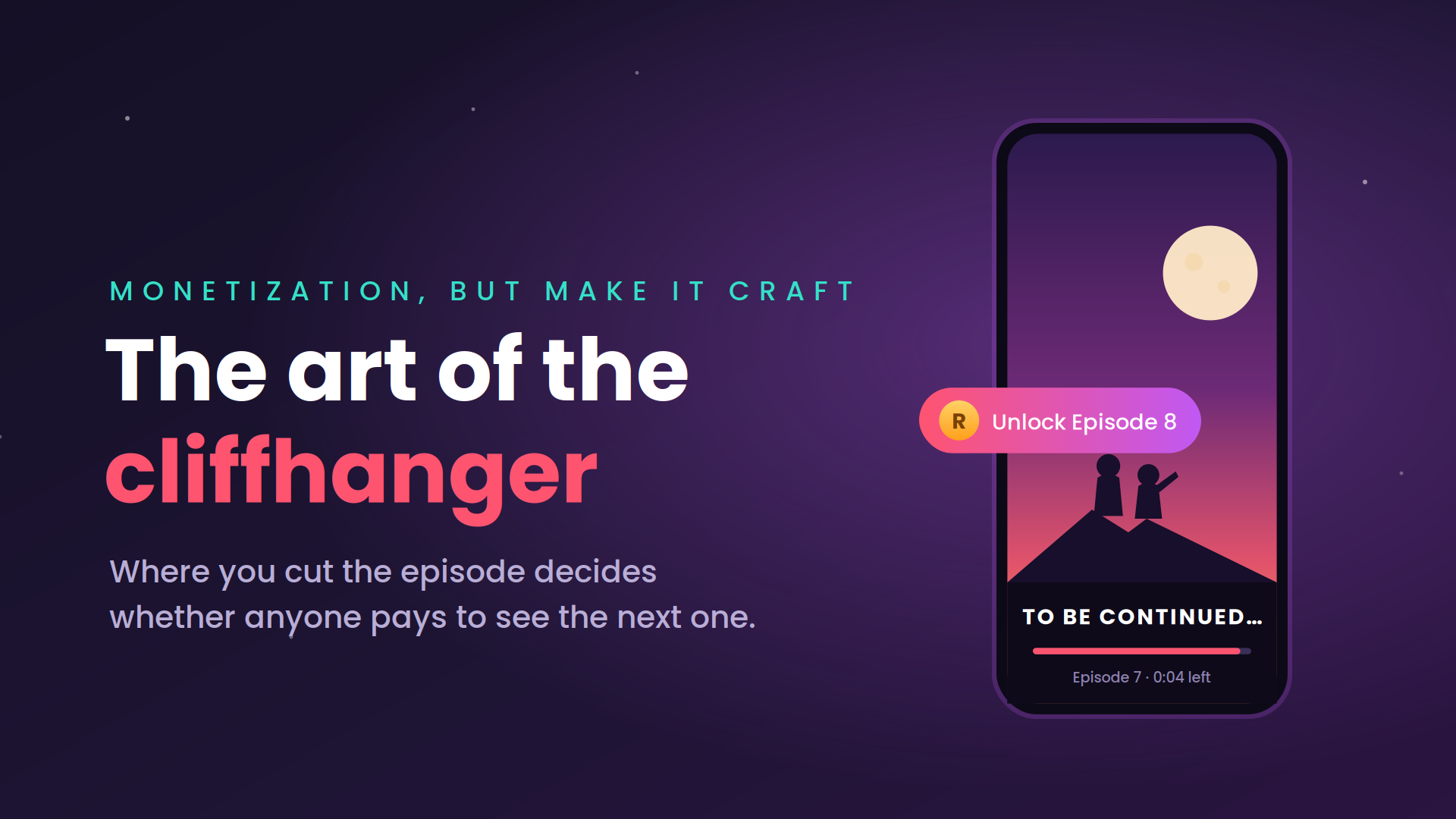
Where you put the paywall in your series matters more than your thumbnail, more than your title, and more than your ending, since plenty of people who'd love your ending will never get there if the break sits in the wrong spot.
If you're making stuff in Video Studio or Story Studio, you already know the deal: viewers spend Runbits to unlock episodes and chapters, and those Runbits turn into real money for you.
You set the price, too. How many Runbits an episode or chapter costs is your call, and pricing follows the same logic as placement: charge what the payoff is worth. A steady price across your series teaches viewers what an episode of yours costs, and once they've learned it, they stop thinking about it. That's what you want. If you're going to charge more, save it for the endings that earn it, like a season finale, and never spike the price on a random midseason episode. Surprise twists are great; surprise prices aren't.
The break goes on the cliffhanger. The real one.
Every serialized story has one moment early on where the audience stops watching casually and starts watching desperately. The letter gets opened. The wrong person walks in. Someone says the thing out loud. That moment is where your first paid episode goes.
The industry has basically settled on a window for this: somewhere between episode 5 and episode 10. That range exists for a reason. Before episode 5, nobody's attached yet. You're asking strangers to pay for characters they met twenty minutes ago, and strangers say no. After episode 10, you've been handing out your best cliffhangers for free and there's nothing left to be desperate about.
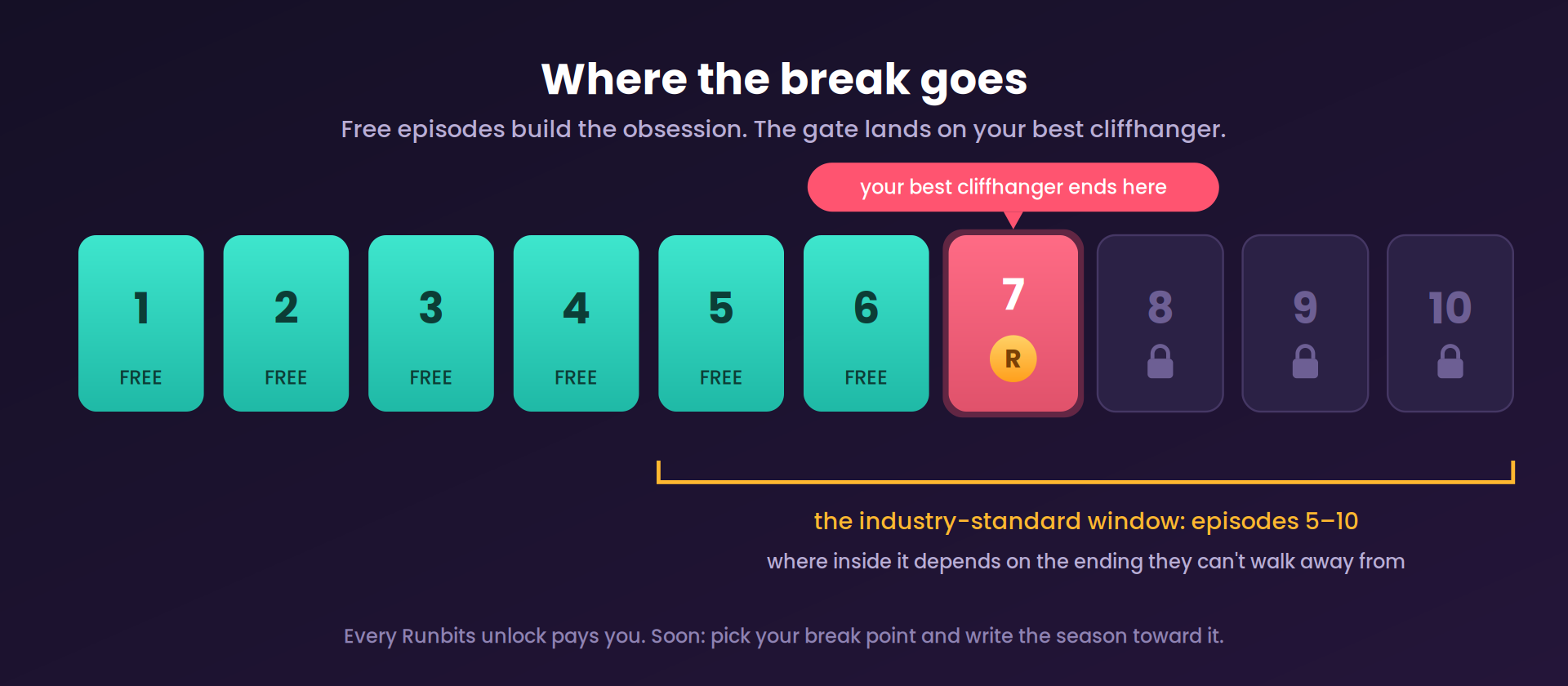
But 5 through 10 only narrows it down. The right spot is whichever episode ends on the cliffhanger you'd be most annoyed to stop at. A decent test: imagine your most loyal viewer watching at 1am, telling herself one more episode, then bed. Which episode ending makes that a lie? That's where the break belongs, so write your season to land your biggest twist there.
What makes a cliffhanger worth paying through
Weak cliffhangers don't convert. A vague "ominous things are coming" ending is a shrug. What works is a question with a face on it. "What does she do now" beats "what happens next," and the she should be someone the audience already loves. Ideally the question pays off something you planted back in episode one or two. If a viewer has been carrying it for four episodes, she'll spend to put it down.
And cut at the peak. The single most common mistake we see is creators ending the episode a beat too late, after the gasp, once things have started to settle. End on the gasp. The explanation is what they're paying for.
Make the paid episode open hot, too, because repeat spending is where the money is. If someone spends Runbits and the next ninety seconds are recap and throat-clearing, that's the last unlock you get from her. If the payoff lands immediately, she's never going to think twice about the next one. Unlocking becomes a habit. Habits are the whole business.
Story Studio: chapters work the same way — choices are its own art
The chapter unlock runs on the exact same engine. Let readers get attached, then end a chapter mid-heartbeat, right where the gate lands. "The chapter ends as you open the letter" will always out-earn "the chapter ends after you've read it." No notes, that's the whole rule.
Interactive fiction also has a lever video doesn't: premium choices. There's a right way and a wrong way to do these.
The wrong way is making the free option miserable. If the free choice is "mumble an apology and leave" and the Runbits choice is "the story continues," readers notice. They feel shaken down rather than tempted, and shaken-down readers close the app. The free path has to be a real story. A good one, even.
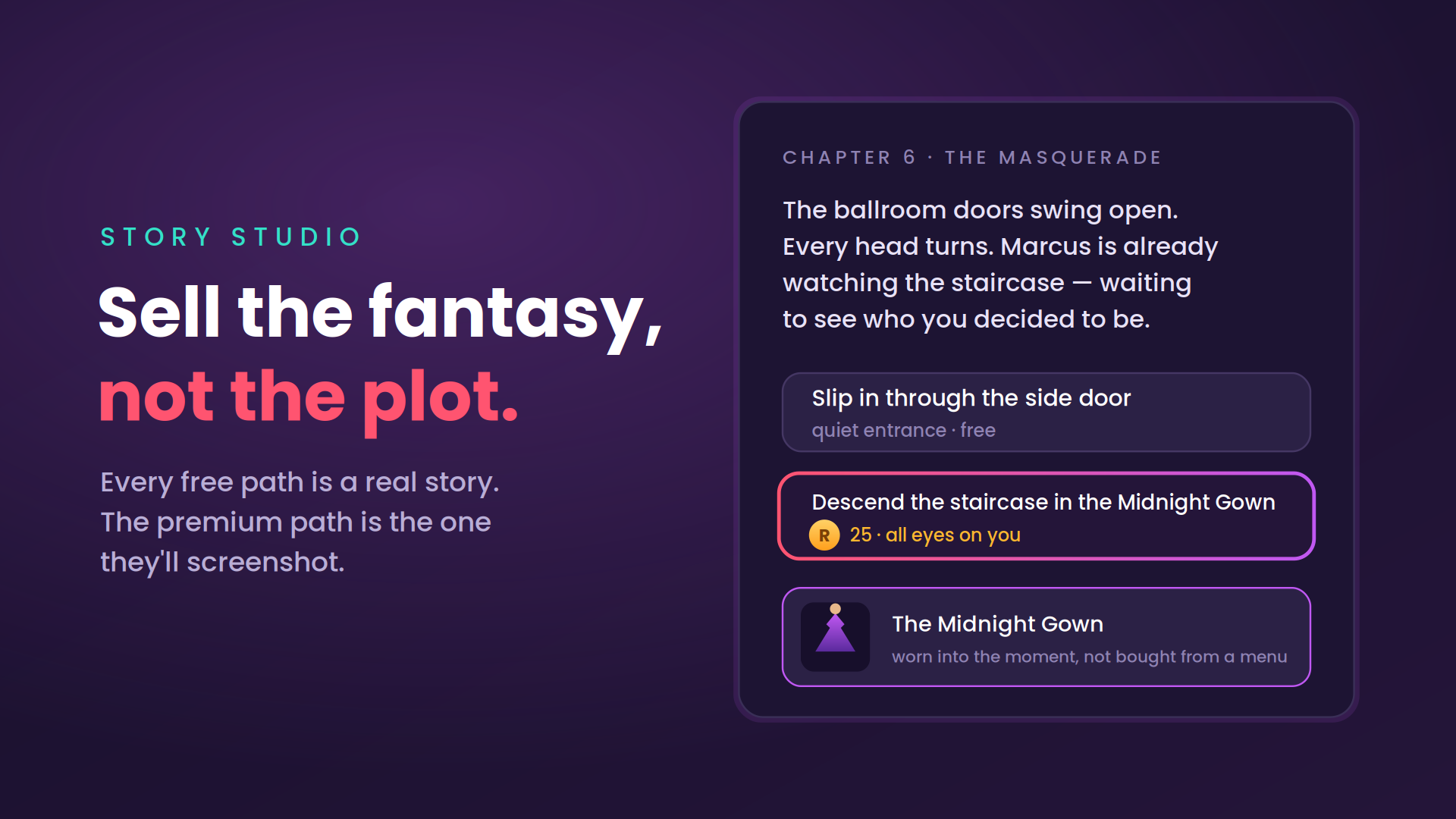
The premium path is the version they'd brag about. The confession instead of the safe answer. The heist route. The extra scene with the character everyone in your comments is already obsessed with. If your comment section ships two characters, that's a purchase order. Write the scene, make it premium, thank us later.
Outfits follow the same logic. A dress in a menu sells poorly; the same dress attached to the ball, the duel, or the reunion with the ex sells itself. Tie outfit choices to scenes where showing up as someone matters, and the outfit becomes the entrance.
On pacing: one or two premium choices per chapter, placed where the emotion peaks. Ten little gates in a chapter earns less than one great one, because readers budget their Runbits for moments that feel big. Your job is making sure that when the moment comes, it's unmistakable.
Coming soon: the break becomes yours
One release coming soon applies to both studios: you'll be able to decide exactly where your locked episode or chapter comes into play, and craft the narrative around it.
That flips the whole process. Instead of finishing a season and discovering where the gate falls, you'll pick the moment first (the betrayal, the reveal, the kiss that gets interrupted) and write everything before it as a fuse burning toward that spot. Same for chapters: choose the door you want readers clawing at, then build the story that brings them to it.
It isn't live yet, but if you're outlining a new series or story right now, start thinking this way. Know your break before you write scene one. When the feature ships, you'll be ready for it.
The whole philosophy, in one sentence
Give away your best opening for free, gate the moment nobody can walk away from, and make the other side of every unlock instantly worth it.
That's it. Every Runbit spent is your audience voting, with money, that your story got its hooks in. Craft the cliffhanger honestly and the unlock takes care of itself.
Now go write the episode ending someone loses sleep over. Video Studio and Story Studio are open.