Tutorials That Don’t Suck
Use this Do/Don't List to create a great tutorial for players!
By RUN.Mgordon · September 14, 2026
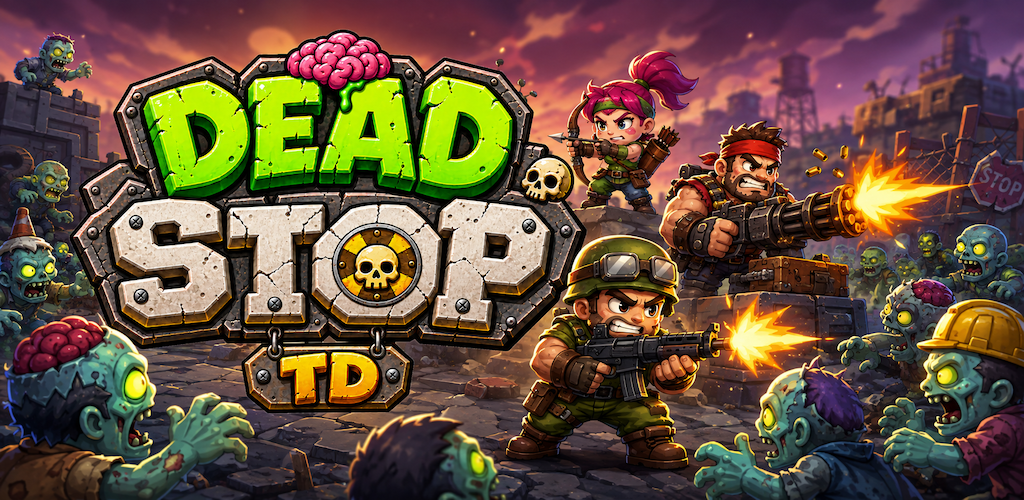
Free to Play games live and die based on user funnels. Funnels to download. Funnels to spend. Funnels to learn. Today we are going to be talking about one of the most important funnels in your game; the tutorial! A good tutorial gets players into the game quickly, teaches the core loop, and then gets out of the way. The goal isn’t to explain your entire game. It’s to get players to the point where they understand what’s fun and what they should do next. I'll be using Dead Stop as a reference for Tutorial Best Practices in this doc. Without further ado, here is a handy list of Do's and Don'ts!
Show, don’t tell. If the player can learn something by tapping, dragging, fighting, building, merging, or collecting, make them do it. Avoid walls of text explaining something they could understand through one interaction. In Dead Stop, you jump right into battle, dragging buildings onto the grid as the first thing you do!!
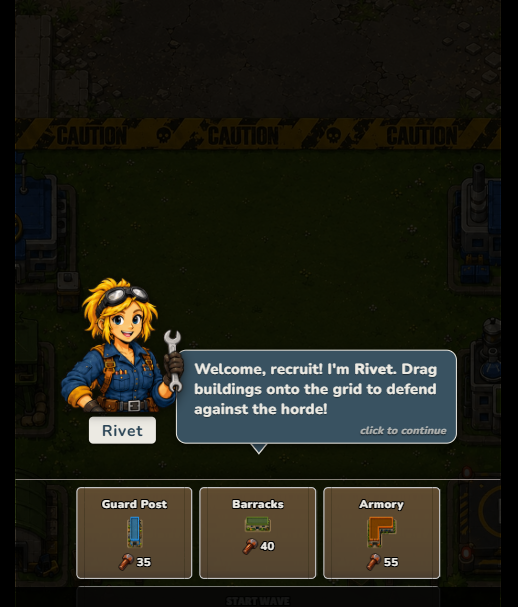
Brevity matters. Every extra tutorial step is another opportunity for someone to quit. Teach only what the player needs right now. Pare back as many unnecessary words as you can.
Explain the core loop. Players should quickly understand the basic rhythm of the game: do the thing → get the reward → use the reward to get stronger → do the thing again. Players are playing your game to have fun...which means they arent' always studying the game/systems out of the gate. Make it easy for them and recinforce the core loop!
Don’t foot-gun the player. During onboarding, don’t let players accidentally waste important currency, sell essential items, make terrible upgrade choices, or otherwise put themselves in a bad state. Early decisions should be safe.
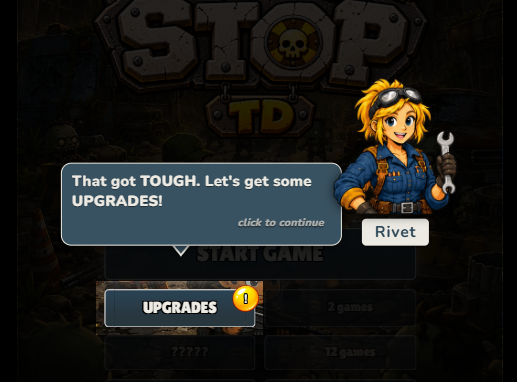
Don’t assume anything. Something obvious to the development team may be completely unintuitive to a new player. The button has an highlight outline around it and a yellow "!" to call attention to it. Make it obvious to the player how to get better (and what the core loop is).
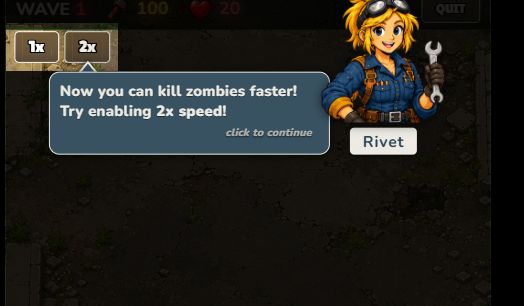
Make tutorials contextual. Teach systems when they become relevant. If crafting doesn’t matter until 20 minutes into the game, don’t explain crafting in minute two. Players don't start Dead Stop with 2x game speed...but once its introduced later in the tutorial...it's critical in speeding the players through gameplay that they already know.
Use quests to continue teaching. The tutorial doesn’t need to be one giant scripted sequence. Early quests can naturally introduce features, rewards, upgrades, and longer-term goals. Quests are key...make it easy for players to figure out what they should be doing next.
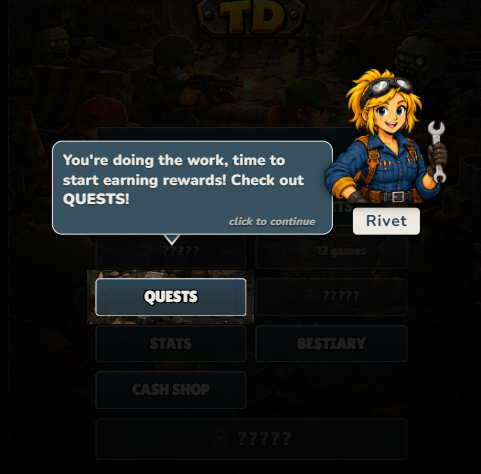
Reveal complexity over time. Most systems should start locked. Introduce them gradually as players demonstrate they understand the previous layer. A new player does not need to see your entire game on their first screen. This is one of the most critical lessons here. I have seen a LOT of vibe coded games throw the kitchen sink in the first MINUTE. It's system over load. The difference between a good game and a great game is pacing.
Avoid multiplayer as the first experience. Let players understand the game in a controlled environment before introducing other players, matchmaking, PvP, guilds, or social pressure.
Measure the funnel. Map every meaningful tutorial step in analytics: Tutorial Start → Step 1 → Step 2 → Core Loop → First Reward → First Upgrade → Tutorial Complete. When you change the tutorial, update the analytics funnel too. Otherwise you're measuring an onboarding flow that no longer exists.
A reasonable tutorial completion target is 50–60%+. More importantly, identify exactly where players are dropping and why.
And finally: PLAY TEST. Analytics tells you where players quit. Watching someone play tells you why. Do both.